

A growing body of evidence supports the use of CT colonography for colon cancer screening and a U.S. panel should reverse its decision to not endorse the procedure, according to the CT Colonography Coalition.
The Gemini LXL PET/CT scanner offers advanced applications and helps to optimize workflow and streamline operations, according to Philips. It features crystal and detector technology and offers 4D capabilities.
Three U.S. senators have joined the debate over the safety of x-ray based whole-body airport scanners, asking federal officials to review scanner health effects on travelers and airport and airline personnel.
To paraphrase Harry Truman, what virtual colonoscopy needs is a one-handed analyst. This was made clear earlier this week in the share price activity of iCAD , which leaped about 18% on news that the FDA had cleared the company’s VeraLook software for interpreting virtual colonoscopy exams. The next day the stock gave back about as much ground as it had gained.
Royal Philips Electronics announced it has acquired Shanghai Apex Electronics Technology, a leading Chinese manufacturer of ultrasound transducers, key determinants of image quality for ultrasound systems. The acquisition strengthens Philips’ portfolio of high-quality transducers specifically aimed at the value segment in emerging markets.
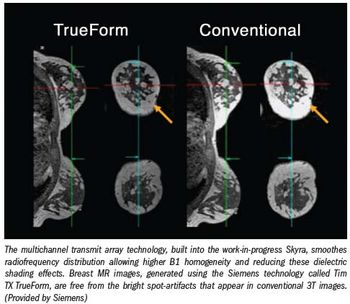
In the last decade, the number of receive channels available on MR scanners has ballooned from one to 128.
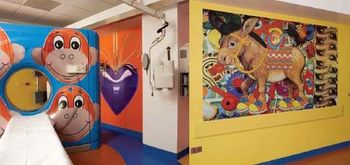
A Philips CT scanner at Advocate Hope Children’s Hospital in Chicago has provided a canvas for pop artist Jeff Koons.
New buyers of PAC systems represent only a small minority of customers, according to IMV Medical Information Division. The need to upgrade or replace systems is the primary driver in the PACS marketplace, with the lion’s share of purchases going for current-system upgrades.
In a case that goes to the heart of privileging issues, six interventional radiologists associated with Radiological Associates of Sacramento have filed lawsuits against Sutter Health for refusing to allow them to perform procedures at Sutter facilities.
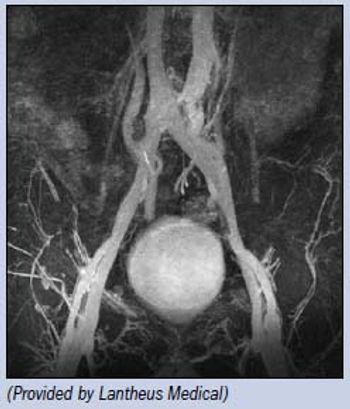
Ablavar, the only commercially available blood pool MR contrast agent, lights up vasculature in this steady-state MR angiogram.
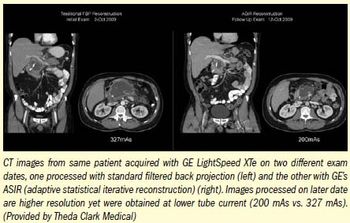
Algorithms that use iterative reconstruction to eliminate noise in images will have a “profound effect” on CT, according to Stanford radiology professor Dr. Geoffrey Rubin.
Finding the path to efficient workflow
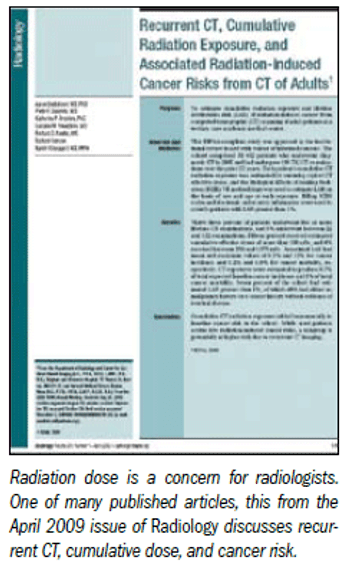
If radiologists don't start addressing cumulative radiation history, someone else will do it for them and radiologists won't like the results, according to a speaker at the International Society for Computed Tomography meeting.
Awareness can be a powerful tool. When 50 centers performing coronary CTA compared protocols, they found that some were exposing patients to 10 times the radiation dose others were.
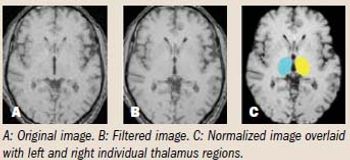
A right-handed, single, 37-year-old Caucasian man with a secondary school degree had been given a diagnosis of schizophrenia (paranoid subtype).
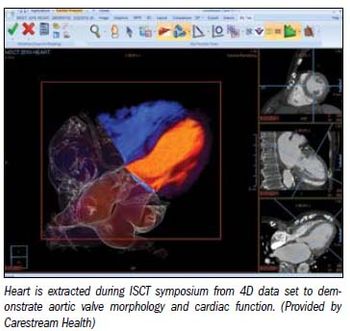
The evolution to isotropic voxels and advances in cheap and powerful computer processing have transformed radiology from a planar science to one that is volumetric.
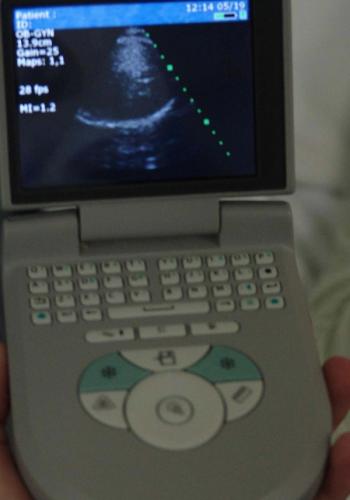
A pilot study involving eight community midwives from Royal Devon and Exeter NHS Foundation Trust suggests that portable ultrasound has the potential to reduce hospital admissions for predelivery scans. This would eliminate the need for patients in remote areas to travel to appointments.
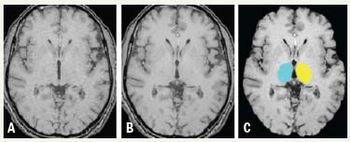
A right-handed, single, 37-year-old Caucasian man with a secondary school degree had been given a diagnosis of schizophrenia (paranoid subtype).

How would you feel if legislators in your state approved a law requiring a specific statement in certain types of radiology reports?
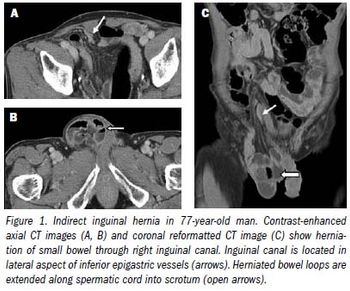
Although most hernias involving the anterior abdominal wall or groin can be diagnosed easily by inspection and palpation, imaging is the principal means of detecting internal, diaphragmatic, and other nonpalpable or unsuspected hernias.1,2
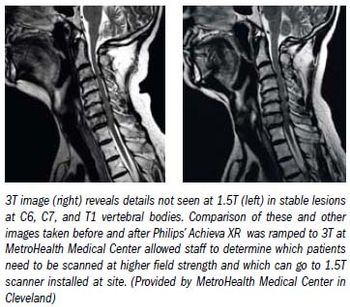
With its add-on software and higher performance coils, field-upgradeable MR scanners are the lifeblood of the imaging community. But systems with upgradeable fields are rare.
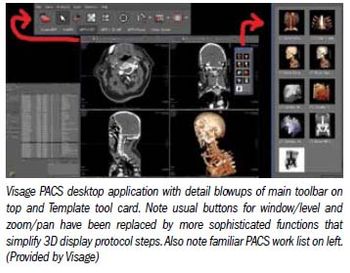
For the past 15 years, most PACS have performed the basic tasks of taking in images, archiving them, sending them to workstations for display, and hopefully not losing them.
On Jan. 24, 2009, newly sworn in President Obama uttered a bold promise: “To lower healthcare costs, cut medical errors, and improve care, we'll computerize the nation's health records in five years, saving billions of dollars in healthcare costs and countless lives.
The adoption of digital technologies and IT in healthcare, and the consequent growth in the volume of patient data, presents hospitals with significant challenges in terms of data storage and obsolescence management.
A dramatic shift in R&D toward patient safety has taken place in the CT industry, a shift most clearly seen in efforts to reduce patient radiation dose. Iterative reconstruction algorithms are a prominent fixture at the ISCT meeting this year, as they and their future development are increasingly seen as providing the means to cut dose, while maintaining or even boosting image quality.

The laws of physics cannot be broken-but they can be bent.
Much is known about dose reduction and adult patients, but what about kids? The literature is scant, but that doesn’t mean solutions don’t exist, according to a presenter at the International Society for Computed Tomography conference May 21.
Efforts to interconnect information systems raise the possibility that different experiences from multiple sites might be pooled and the practice of medicine made better through a kind of collective wisdom. At the ISCT symposium, Sandy Napel, Ph.D., a Stanford professor of radiology and codirector of the Radiology 3D Laboratory, examined how diagnoses made on some patients might help clarify whether the same diagnoses apply to others.
GE Healthcare jumped ahead of competitors in the race to cut patient dose with the commercial release in 2008 of its Adaptive Statistical Iterative Reconstruction (ASIR), the first software to clean up CT images and, in the process, allow dramatic reductions -- up to 50% -- in patient radiation dose. In the first day of this year’s ISCT symposium, iterative reconstruction was hailed repeatedly as the leading solution to the hottest issue in CT patient safety.
Three-D is all the buzz, as PACS companies struggle to include it in their products, if they haven’t already. But where this form of advanced visualization fits into the diagnostic process is still up in the air. Ironically, so are some of the everyday tools on which advanced visualization depends. Trust issues about the automation that makes sophisticated postprocessing viable are beginning to surface, just as progress in CAD offers new clinical capabilities.