

PET hybrid technologies are already hot, and two innovations discussed during the final session of ECR 2011 are aimed at making them more even powerful and efficient.
Five years after the first reports linking gadolinium-based MRI contrast agents to nephrogenic system fibrosis (NSF), separate presentations of post-marketing data from manufacturers and an independent prospective study supported by agencies in France have validated the low-risk status of the contrast agent Dotarem (Gd-DOTA).
The final rule for phase 1 of the federal government’s EHR meaningful use initiative, published in July 2010, failed to specify inclusion of diagnostic images as a requirement to qualify for incentives. As healthcare organizations across the country execute on plans to secure stimulus funds, most do not include diagnostic images.
The rise of electronic health records can facilitate the use of decision support systems when ordering and selecting imaging tests. Also, should these tools be mandated?

HealthDay News - Dose-dependent relationship found between low-dose ionizing radiation exposure, cancer risk
For those who want to overturn the law, the real risk is that in the longer term it sets up the likelihood of a single-payer system. In my opinion, by making the fines less than the cost of the insurance, it leaves a way for companies to not insure their employees. So it automatically ensures that businesses will take the cheaper way out, driving all of those individuals into the state pools for their required coverage.
The first incentive checks are being delivered under CMS’s meaningful use program for electronic health records. But for many radiologists, the program is just now coming into focus. Here's what you should be doing now.
With Siemens close on its heels, Philips became the first company to get the green light to market its hybrid whole body PET/MR imaging system. Royal Philips Electronics announced this week that it received a CE marking, allowing the company to begin selling in Europe.
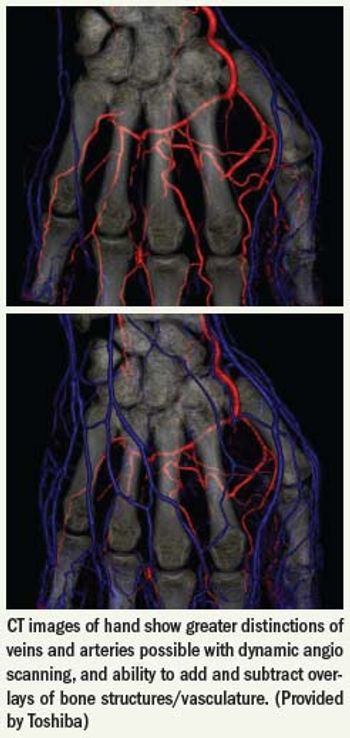
The ability to control time-or, more specifically, temporal resolution-for volumetric acquisitions, is helping to create new applications and boost diagnostic confidence, particularly in musculoskeletal examinations.
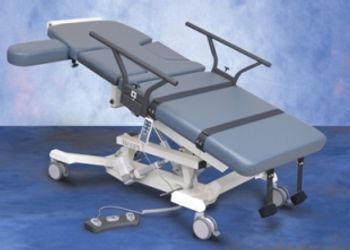
Aching hands and a sore back are often familiar ailments for those working in a digital imaging department. However, there is a trend among radiology practices and hospitals to provide workstations that are far more comfortable.
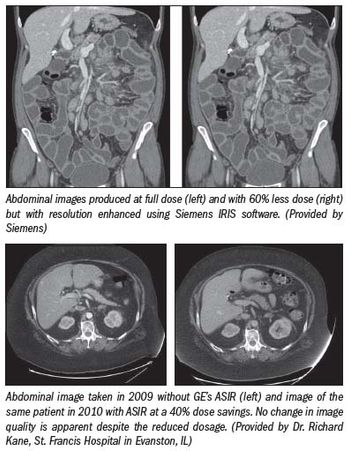
Dose reduction at one time played second fiddle to image quality, but today it enjoys top billing. New algorithms are coming into play in CT, radiography, and fluoroscopy to maintain image quality at traditional levels by processing out the noise that sneaks in during low-dose exams. In some cases, fear of radiation has gotten so bad that patients forego CT and other sources of ionizing radiation all together.
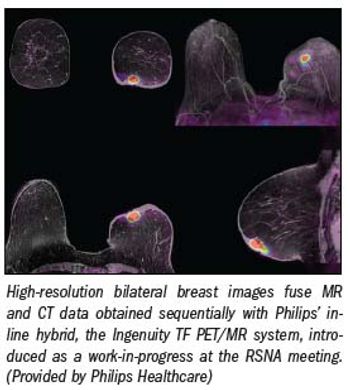
PET/MR is the logical next step in hybridization, the step that follows PET/CT, one that vendors finally took at this year's RSNA meeting. It has come a decade after PET/CT was first commercialized and nearly as long since pundits concluded that its arrival was inevitable.
Sonography aspires to pushbutton simplicity, but the nature of the technology stands in the way.
Demand for CT is dropping in some quarters of the imaging community, down by single-, sometimes even double-digit percentages.
Wireless x-ray detectors have come into vogue and are now available from a half dozen vendors. They are being offered singly, as a digital upgrade for analog x-ray systems, for example, or as the core of portable and advanced fixed radiography systems. GE Healthcare is among those offering a portfolio of such choices. But GE is putting a twist on its wireless detector, dubbed the FlashPad, one that company execs say will prevent what could be a ticklish problem in the future. This potential problem stems from the success of digital radiography.
A navigation system from Toshiba America Medical Systems has made complex interventions a little simpler.
Remote radiography and fluoroscopy systems traditionally have appealed more to Europeans than to practitioners in the U.S. But Philips is betting the time-and design of its new Juno DRF-are right to make a change in old habits. The Juno DRF remote-controlled flat-detector system, recently cleared by the FDA, offers enhancements that Philips Healthcare is promoting in its RSNA booth as the means to faster workflow and patient throughput and maximized return on investment.
Philips is adding to its portfolio a new line of CT scanners and a new line of PET/CTs based on dose-saving technologies. Ingenuity CT will displace Philips’ Brilliance line of CTs in configurations up to 128 slices; the Ingenuity TF PET/CT will displace the company’s Gemini platform of PET/CTs. Philips will not stop making these older models, but will feature them in its product portfolio as alternatives to the latest releases.
A radiation monitoring system that quantifies the radiation being absorbed in the fluoro suite promises to give individual staff the information they need to minimize their exposure to x-rays. Philips Healthcare came up with the product, called DoseAware, which the company unveiled earlier this year at the European Congress of Radiology and now on the RSNA 2010 exhibit floor.
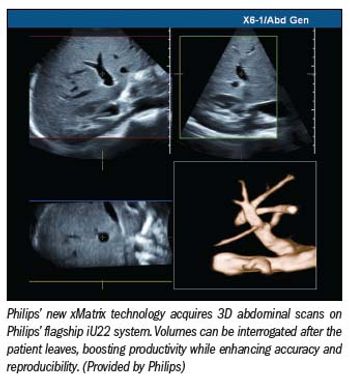
Philips’ new xMatrix brings real-time volumetric scanning to radiology as part of the company’s latest version of the iU22 ultrasound scanner. First built into Philips’ echocardiography systems five years ago, a souped-up version built into the company’s flagship iU22 on the RSNA exhibit floor quickly captures volumes in the abdomen that can be interrogated in 2D planes any time after the patient has left the exam room. Two planes can be viewed simultaneously using Live xPlane. Images drawn from the volume can then be sent to any PACS.
Mobile devices for image display scored well in scientific papers presented Monday but still face significant hurdles before they are ready to become a routine part of image interpretation.
In the battle against patient overdose, Toshiba America Medical Systems brought two weapons to RSNA 2010. One is its Adaptive Iterative Dose Reduction (AIDR), software similar in approach to products from competing CT vendors who use iterative reconstruction to squeeze noise out of their images. The other, Target CTA, is a dose protocol devised specifically for cardiac scans done on the Aquilion One.
Siemens demonstrated Sie-Reality at this year’s RSNA conference. The new ultrasound technology displays fetal images that take on a third dimension when viewed through 3D glasses.
Toshiba America Medical Systems framed the latest upgrades to its Aquilion One and Aquilion Premium scanners at the 2010 RSNA meeting as the means for improved productivity.
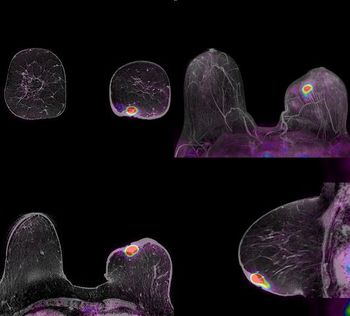
Nearly a decade after PET/CT was first commercialized, vendors at RSNA 2010 took the next logical step and combined MR and PET. The result is unlike anything seen before.
Fuji Medical USA has integrated 3D directly into its Synapse PACS, eliminating the need for thin-client 3D or dedicated 3D workstations accompanying its PACS. The newly integrated technology, dubbed Synapse 3D, was shown for the first time as a commercial product at RSNA 2010, accompanied by a work-in-progress application called Synapse Mobility that promises to allow access to Synapse PACS images and clinical tools using handheld devices.
Seeking to drive down patient radiation dose, Siemens Healthcare unveiled a new technology platform for its CT scanners, one that not only cuts dose but speeds the exam and promotes more efficient patient handling
Low-dose CT works just as well in the detection of acute appendicitis as standard dose. In an interview with Diagnostic Imaging Dr. So Yeon Kim explains the image quality of low-dose CT and the possibility of low-dose CT replacing standard dose in acute appendicitis patients.
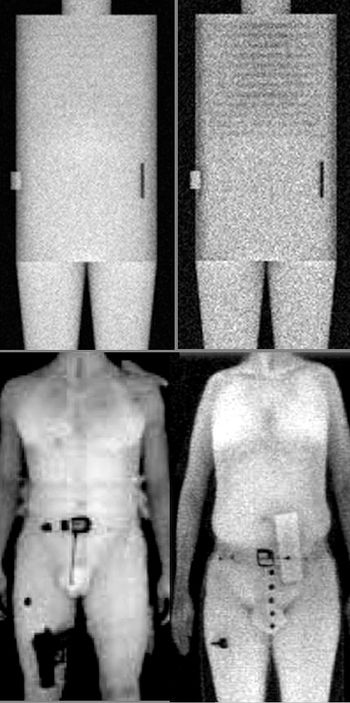
A phantom study suggests whole-body x-ray scanners are not effective. Backscatter scanners unlikely to detect substantial explosive amounts on the body.
When the gatekeepers clear the way to the exhibit halls at McCormick Place, Canon USA will be out with its CXDI-70C Wireless Digital Radiography System, but it won’t be alone. A gaggle of vendors, including Carestream and Fuji, will be showing portable x-ray detectors as well.