




CT
Latest News
Advertisement
Latest Videos




Shorts

0:34
Could Diabetes Be a Key Trigger for Bone Loss and Cognitive Decline?
6 days ago
by
Shadpour Demehri, MD

0:42
Emphasizing the Need for More Research on Indication-Based DRLs for CT Imaging
18 days ago
by
Kalpana Kanal, PhD

0:39
The Emerging Impact of AI-Powered Quantitative Analysis in Radiology
25 days ago
by
Christoph Wald, MD, PhD, MBA, FACR, Hon FRCP(Glasg)

0:34
Is Maturing Technology with CT Scanners a Key Factor with Reduced Radiation Dosing?
25 days ago
by
Mahadevappa Mahesh, MS, PhD, FAAPM, FACR

0:59
Why CMS Won't Pay for AI Lung Nodule Detection on CT
a month ago
by
Lauren Nicola, MD
0:31
'Moving in the Right Direction' with CT Radiation Dosing
a month ago
by
Kalpana Kanal, PhD

0:44
Timely Access to Neuroimaging: One of the Biggest Challenges in Stroke Care
a month ago
by
Arun Talkad, MD

0:53
How AI-Enabled Triage Helps Navigate Weekend Call Duties in Radiology
a month ago
by
Raza Mushtaq, MD

0:38
How AI Triage Efficiency Gains in Neuroradiology May Facilitate Improved Work-Life Balance
2 months ago
by
Vivek Singh, MD

0:26
Screening Implications for AI Assessment of Coronary Inflammation from Non-Contrast CT
2 months ago
by
Kenneth Chan, MBBS
Podcasts









Advertisement
More News
Catch up on a variety of FDA news in radiology from the past week.

Catch up on the top AI-related news and research in radiology over the past month.
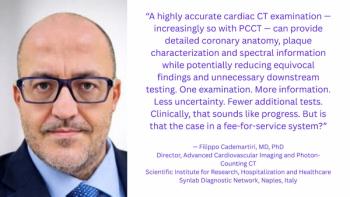
While better imaging may reduce the need for additional diagnostic tests, it may also eliminate the reimbursement that comes with those additional tests.

In a study involving over 700 participants who had chest CT and brain MRI, those with diabetes and lower vertebral bone mineral density (vBMD) had a nearly five percent faster total accumulation of white matter hyperintensity (WMH) in comparison to those without diabetes.
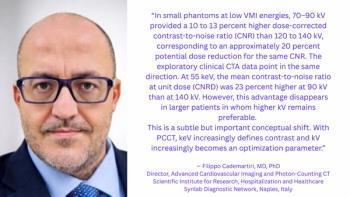
Emerging research demonstrates the increasing stability of attenuation on clinically relevant VMIs with photon-counting CT and a redefined role of kV that may have implications for longitudinal quantitative CT.

Catch up on the latest imaging research from the recent European Society of Cardiology (ESC) Congress.
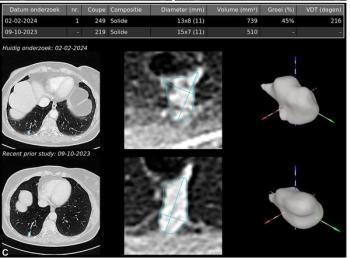
The use of adjunctive AI for pulmonary nodule assessment on chest CT exams led to over a three-minute reduction in median reporting time, according to newly reported research.
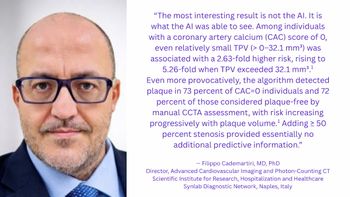
A new study shows that even small plaque volume may be associated with significantly higher risk for cardiovascular events, making the enhanced spatial resolution available with advanced imaging even more critical in risk stratification.
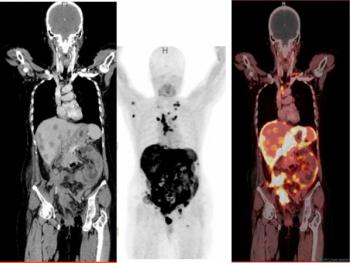
In comparison to contrast-enhanced CT, FAPI PET was associated with over 27 percent higher sensitivity for peritoneal carcinomatosis in the small bowel and 53 percent higher sensitivity in the upper abdomen, according to a new study involving 200 women with primary ovarian carcinoma.
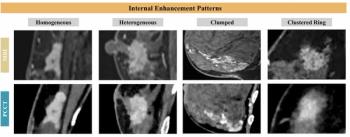
New research suggests that photon-counting CT provides comparable sensitivity to breast MRI for lesion characterization, higher accuracy than MRI for nodal metastasis and lower detection of microcalcifications in comparison to full-field digital mammography.
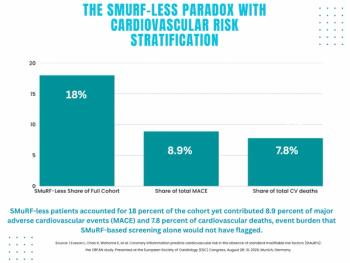
Elevated coronary inflammation, measured with the CCTA-derived and AI-enabled perivascular fat attenuation index (FAI) score, was associated with over a 12-fold higher risk for cardiovascular mortality in patients with no diabetes, hypertension, smoking history or obesity, according to new research presented at the European Society of Cardiology (ESC) Congress.
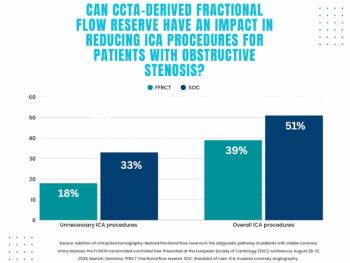
New research presented at the European Society of Cardiology (ESC) conference demonstrates that fractional flow reserve (FFR) based off CCTA exams significantly decreases unnecessary invasive coronary angiography (ICA) procedures for patients with stable chest pain and obstructive stenosis.
Catch up on the top AI-related news and research in radiology over the past month.
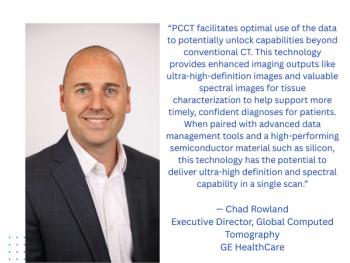
In addition to providing stronger image quality, well-designed photon-counting CT systems may facilitate increased standardization, efficiency and simplification that may lead to reduced cognitive burden for radiologists.
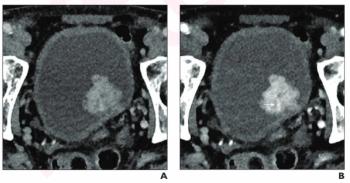
Reducing false positives in evaluation of muscle invasion in bladder cancer cases that can occur with conventional imaging, spectral information with photon-counting CT may offer significantly improved accuracy and specificity in local staging.
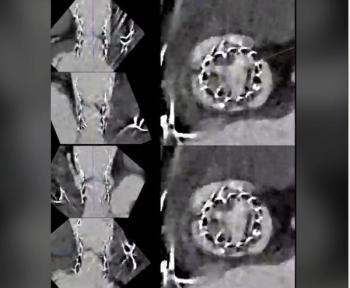
The high-resolution temporal and spatial imaging with photon-counting CT bolster our understanding of the connections between anatomy and function in structural heart imaging.
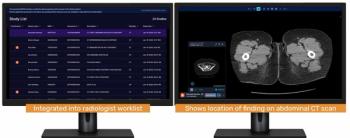
Use of the CARE Multi-Triage CT Body software will be eligible for a New Technology Add-on Payment (NTAP) from CMS starting on October 1, 2026 for inpatients in Medicare fee for service plans.

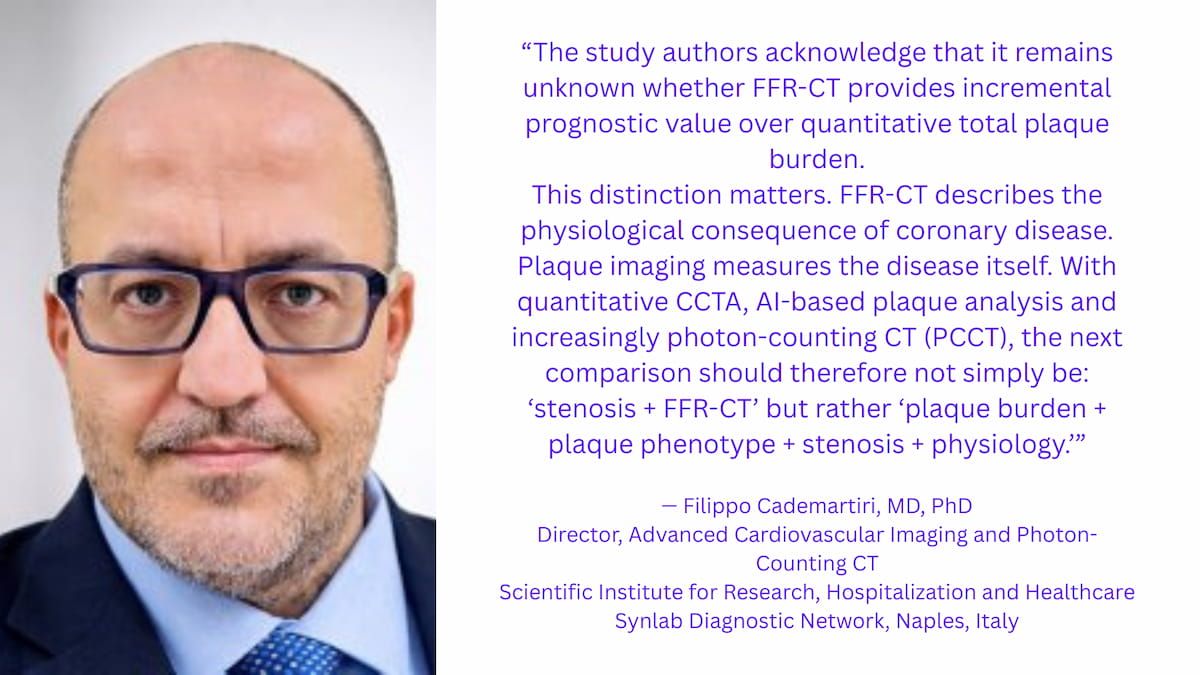
Catch up on the latest blogs from Filippo Cademartiri, MD, PhD, who discusses topics ranging from CCTA scan acquisition and photon-counting CT to artificial intelligence and assessment of current plaque as a biomarker for evaluating MACE risk.

Catch up on the top radiology content of the past week.
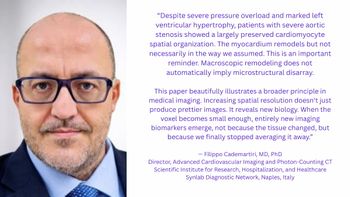
Smaller voxel size may offer insights into biology we could never access with conventional resolution.
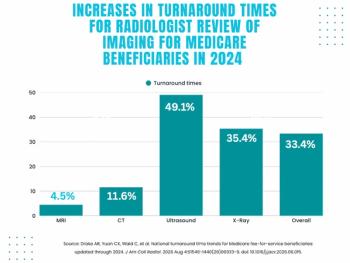
In comparison to 2023 statistics, the authors of a new study noted an approximately 49 percent increase in radiology turnaround time for ultrasound interpretation and over a 35 percent increase in turnaround time for X-ray assessments.
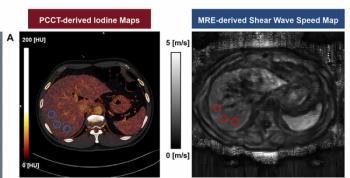
Extracellular volume fraction (ECV) assessment with photon-counting CT offered higher sensitivity and comparable specificity and AUC to magnetic resonance elastography (MRE)-derived liver stiffness measurement (LSM) for evaluating patients with stage 2 or higher fibrosis, according to a recent study.
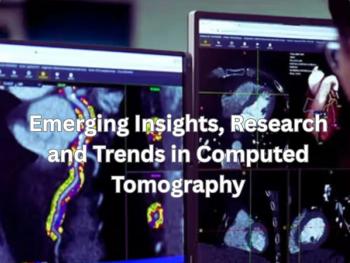
New computed tomography (CT) research in July 2026 ranged from the ongoing impact of AI to significant declines in CT radiation dosing over the past decade to a growing recognition that coronary artery calcium (CAC) scoring alone may not be sufficient to convey a true picture of cardiovascular risk stratification.
Catch up on the top radiology content of the past week.
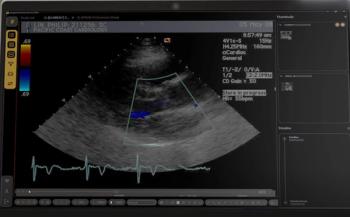
Offering rapid loading and viewing access for CT, MRI, ultrasound, PET imaging and mammograms, the ImageGrid® StreamVue platform can be integrated into existing PACS environments at hospitals and imaging centers.
Advertisement
Advertisement
Trending on Diagnostic Imaging
1
Diagnostic Imaging's Weekly Scan: September 27 — October 3
2
Emerging Research Insights and New Advances in Neuroradiology
3
The Reading Room Podcast: Current Perspectives, Challenges and Possibilities with AI in Breast Imaging, Part 2
4
Current Perspectives on Integrating AI into Radiology
5