

Virtual Radiologic, one of the nation’s two publicly traded teleradiology companies, has agreed to be acquired by Providence Equity Partners, a private equity firm, for $17.25 per share in cash, the companies announced Tuesday.
A dramatic shift in R&D toward patient safety has taken place in the CT industry, a shift most clearly seen in efforts to reduce patient radiation dose. Iterative reconstruction algorithms are a prominent fixture at the ISCT meeting this year, as they and their future development are increasingly seen as providing the means to cut dose, while maintaining or even boosting image quality.
Three cases-one for the colon, a second in cardiology, and a third addressing the liver-will serve as the playing fields for this year’s Workstation Face-Off. Seven companies will go head to head Wednesday May 19 from 3:30 to 6 p.m. with luminaries putting their workstations through carefully choreographed steps.
Nearly two decades have passed since the makers of imaging equipment began servicing equipment remotely. This revolutionary concept was a reaction to threats mounted by former field technicians of the giant equipment makers, self-styled entrepreneurs who promised to keep MR and CT scanners running at half the price charged by their previous employers.

Living in England has inevitable consequences, ones shared with most of Northern Europe. The winter is long and dark, and, in South West England, also wet and cold.

For the first time in a year and a half, orders for Philips medical imaging equipment edged up in North America. It is the first tangible glimmer of hope that the great imaging recession may finally be over.
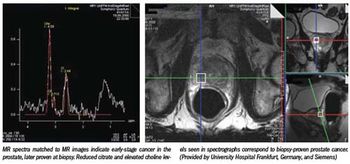
The idea of MR spectroscopy has been kicking around almost as long as MR itself. The allure is seductive: a noninvasive biopsy that quantifies in hard numbers the presence-or absence-of cancer.
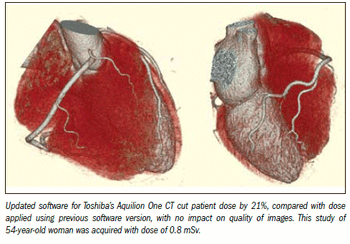
The means to reduce radiation dose are often at the fingertips of CT operators.
Presence of plaque on an abdominal CT scan is a strong predictor of coronary artery disease and mortality, according to a study from Henry Ford Hospital in Detroit.
For the first time in a year and a half, orders for Philips medical imaging equipment edged up in North America. It is the first tangible glimmer of hope that the great imaging recession may finally be over.
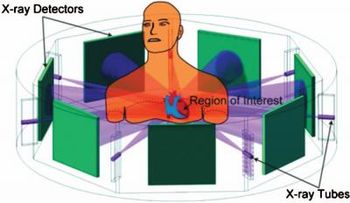
A new CT generation takes shape as vendors introduce designs that cut dose and increase resolution.
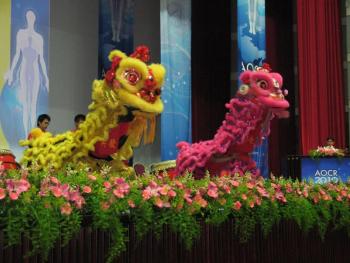
The 13th Asian Oceanian Congress of Radiology (AOCR2010), taking “Radiology – The Core of Healthcare” as its theme, kicked off with concurrent tracks in musculoskeletal, abdominal, breast, cardiovascular, emergency, genitourinary, and interventional specialities. Chinese drums and a lion dance added fanfare to the opening ceremony.
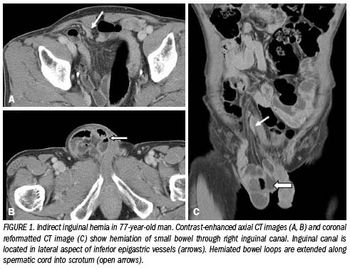
Although most hernias involving the anterior abdominal wall or groin can be diagnosed easily by inspection and palpation, imaging is the principal means of detecting internal, diaphragmatic, and other nonpalpable or unsuspected hernias.1,2
Healthcare reform legislation signed into law last month by President Obama promises to bring sweeping changes to the healthcare system, potentially including the practice of radiology.
Integration today comes in tastes that whet the appetite but don’t satisfy. And even these come grudgingly.
Radiologists can anticipate a sea change in the way their facilities monitor and manage CT dose exposure as a series of initiatives now under way begins to bear fruit.
In April 2009, the Chinese government announced guidelines for healthcare reform, with the core goal of providing universal healthcare services to the country’s 1.3 billion people. China will invest RMB850 billion ($124 billion) on healthcare from 2009 to 2011, further stimulating demand for medical devices, in what is already one of the world’s fastest growing markets for medical technology. One year later, a number of new regulations and guidelines are in place that are beginning to reshape the structure of the Chinese healthcare industry.
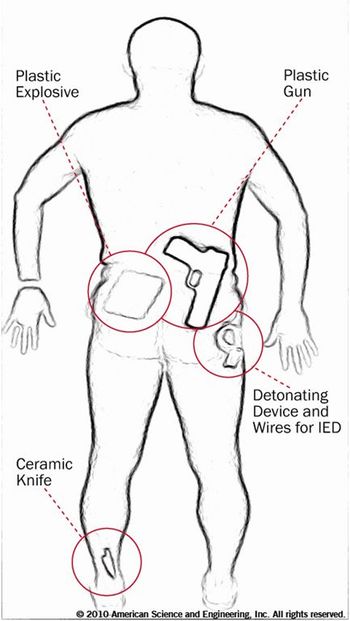
In a recent article entitled Radiation risks: Are airport body scanners ‘a great public health experiment’?”, Leon Kaufman argues that the use of these scanners at airports exposes airline passengers to undetermined amounts of radiation without reason and with little knowledge of the consequences. I would like to address certain incorrect assertions in this article.
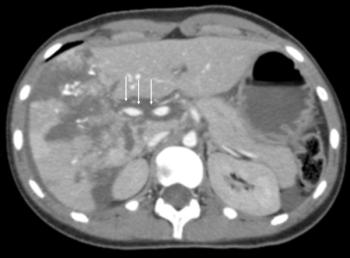
It is widely accepted that reducing time from admission to definitive care saves lives, but usually imaging is one of the major sources of delays. This means radiologists play a vital role in prioritizing patients and selecting the correct modality.
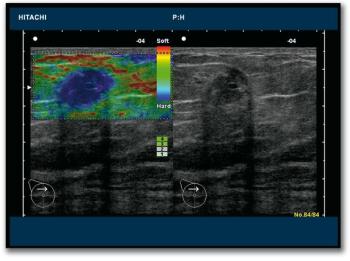
The exhibition booths occupied by vendors of ultrasound systems at ECR 2010 are likely to be very busy places throughout the congress. Difficult economic conditions are causing a dip in global demand for the more capital-intensive modalities like CT and MRI, and hospital managers are keen for their staff to explore the clinical potential of this versatile and cost-effective technology.
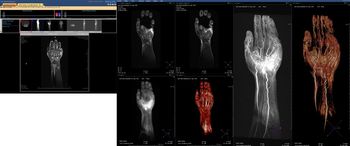
PACS vendors in the technical exhibition at ECR 2010 are demonstrating some of the hottest gadgets that will be filling the toolbox of tomorrow’s distributed radiology services.

People, not images, were the stars of the show at the ECR 2010 Josef Lissner honorary lecture. Prof. Suzanne Anderson used her 30-minute timeslot to link inspirational teachers and mentors to the future of musculoskeletal radiology.
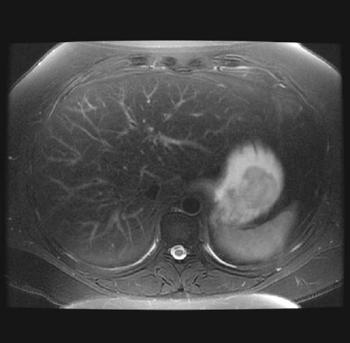
Physicians have used palpation regularly as a diagnostic technique since the days of the ancient Greeks. Up to now, the potential value of this method has been explored in the imaging field only by ultrasound research teams, but at this year’s ECR technical exhibition, delegates can see for themselves how the same principles may be combined with MRI to improve diagnosis in patients with liver disease.
CT protocols used by researchers at Loma Linda University decreased radiation dose up to 95% when de-tecting distal ureteral calculi.
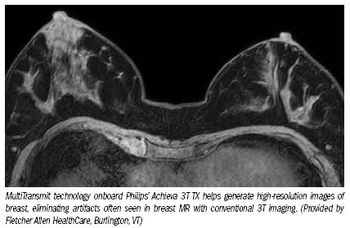
Neurological and musculoskeletal imaging are spectacular at 3T, thanks to its higher signal to noise ratio compared with lower field strengths.
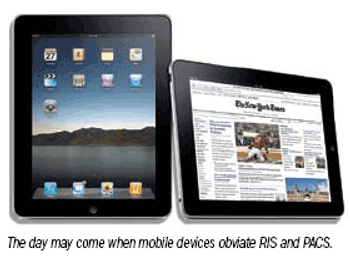
Trends in radiology used to be simple and predictable.
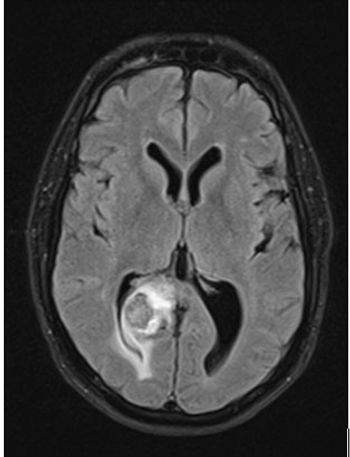
MR developments over recent years have allowed researchers to explore water molecule motion between cells using diffusion-weighted imaging to indirectly measure cellular density within a tissue. This has provided a new and continuously evolving tool in oncologic imaging for lesion detection, characterisation, and therapy assessment.
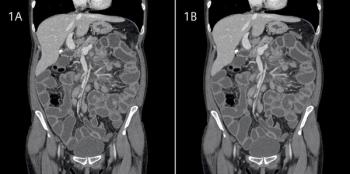
Radiology is a medical specialty created by a fertile marriage between biology and physics. But it is an entirely different academic discipline that is the focus of the research by major vendors of CT technology on show this year at the ECR’s technical exhibition. Their studies have centered on the subject that the illustrious 19th century German scientist Carl Friedrich Gauss called “the queen of sciences”: mathematics.
On Feb. 28 President Obama was screened for colorectal cancer using CT colonography. The results from this exam, also called virtual colonoscopy, along with those from the rest of the president’s annual physical, which was done at the National Naval Medical Center in Bethesda, described the president as “fit for duty.”