
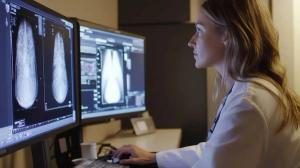
In a recent interview, Jamie Williams, M.D., discussed newly published research findings revealing the impact of high-resolution digital breast tomosynthesis (DBT) on breast cancer detection and recall rates.
In a recent interview, Jamie Williams, M.D., discussed newly published research findings revealing the impact of high-resolution digital breast tomosynthesis (DBT) on breast cancer detection and recall rates.
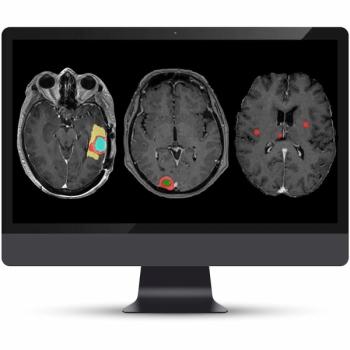
The addition of two new AI-enabled models for the latest version of the NeuroQuant Brain Tumor software facilitates automated tracking of the progression of brain tumors and meningiomas.
Catch up on the most-well viewed radiology content in July 2025.
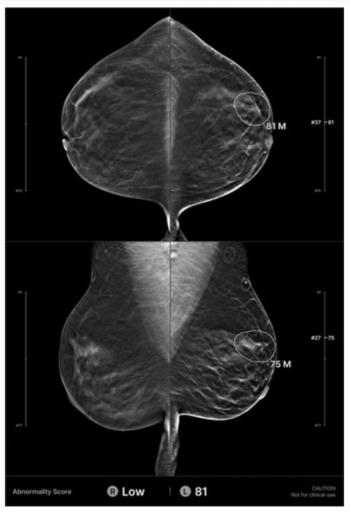
In a retrospective review of screening digital breast tomosynthesis (DBT) exams for over 200 women with interval breast cancers, researchers found that AI provided accurate localization of cancers in 32.6 percent of the cases.
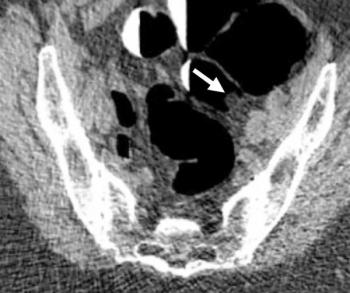
Computed tomography colonography (CTC) demonstrated a 91.6 percent positive predictive value (PPV) for polyps > 6 mm, according to new research involving over 9,000 patients who underwent CTC for primary asymptomatic colorectal cancer screening.
In a recent interview, Matt Covington, M.D., discussed challenges with the development of radioligand therapies for breast cancer and the potential of emerging radioligand agents to augment current treatment options in this patient population.
Catch up on the top AI-related news and research in radiology over the past month.
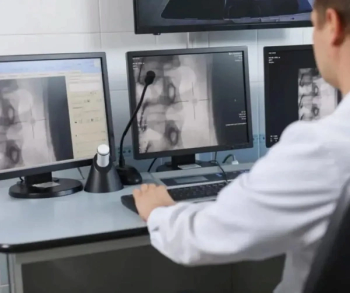
Recognizing that many abnormalities don’t ‘read the textbook,’ we strive to provide the most accurate assessments amid the gray zones of image interpretation.
Catch up on the top radiology content of the past week.
In the second of a multi-part podcast episode, Emanuel Kanal, M.D. and Tobias Gilk, MRSO, MRSE, share their perspectives on remote MRI safety protocols for ensuring screening accuracy and adherence to conditional implant guidelines as well as a rapid and effective response to adverse events.
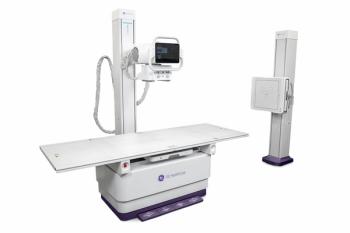
The newly launched Definium Pace Select ET X-ray platform reportedly provides increased automation and advanced image processing.
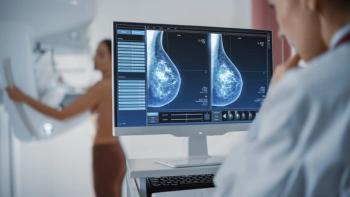
State law changes expanding screening mammography coverage from biennial to annual exams and to women 40 years of age in 2019 also led to a 5 percent higher likelihood of screening for Missouri women with commercial health insurance.
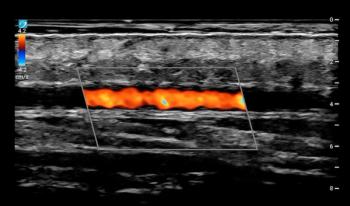
Offering a minimum scan depth of 4 mm, the UHF46-20 Transducer reportedly provides high-quality resolution for visualizing superficial nerves and vessels.
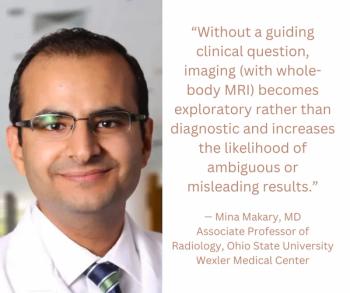
Beyond the hype, whole-body MRI offers limited clinical benefit in the general population with extraneous use potentially triggering a cycle of overdiagnosis, unnecessary treatment and financial strain.
In the second part of a multi-part podcast episode, Stamatia Destounis, MD, Emily Conant, MD and Habib Rahbar, MD, discuss key sequences for abbreviated breast MRI and how it stacks up to other breast cancer screening modalities.
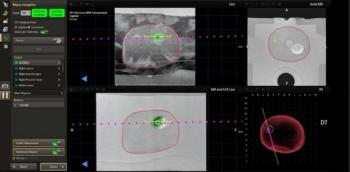
Advanced annotation with the updated UroNav MRI/ultrasound fusion platform may facilitate enhanced precision and efficiency with focal therapies for prostate cancer.
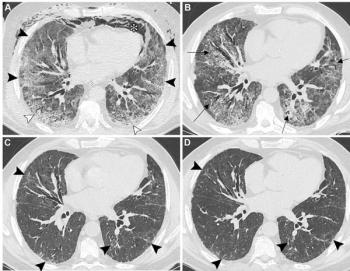
Developed by 21 thoracic radiologists, the new international consensus statement addresses appropriate indications, scan acquisition and keys to reporting for the use of chest CT imaging in evaluating for residual lung abnormalities from COVID-19.
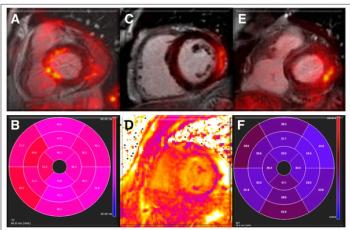
In a prospective study involving nearly 100 patients with Long Covid, 57 percent of patients had PET/MRI abnormalities and 90 percent of the cohort had abnormalities on dual-energy CT scans.
In the first of a multi-part podcast episode, Emanuel Kanal, MD and Tobias Gilk share their insights and perspectives on remote MRI safety.
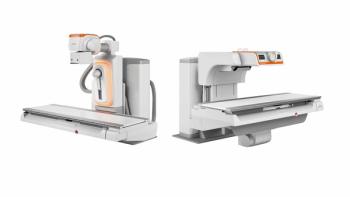
Offering ergonomic controls and AI-enabled features, the remote-controlled Luminos Q.namix R system and the Luminos Q.namix T platform with tableside control reportedly facilitate workflow efficiencies for complex radiography and fluoroscopy examinations.

From adjusting to the rules of early childhood games to understanding the nuances of tax law and the ‘One Big Beautiful Bill,’ adaptability plays a key role in navigating change.
Catch up on the latest MRI studies, AI innovations, and expert insights on abbreviated breast MRI with our Weekly Scan.
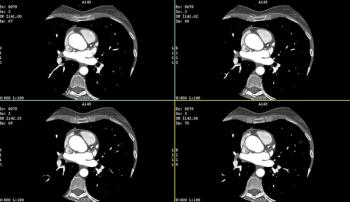
The dose length product (DLP) for the flash mode on a dual-source photon-counting CT system was less than a third of that for the spiral mode, according to a study of CTA findings for 1,000 patients presented at the Society of Cardiovascular Computed Tomography (SCCT) conference.
In the first of a multi-part podcast episode, Stamatia Destounis, MD, Emily Conant, MD and Habib Rahbar, MD, share their insights on the role of abbreviated breast MRI in breast screening.
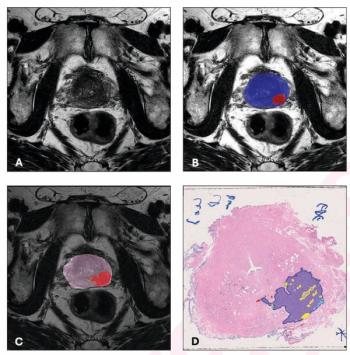
The use of adjunctive bpMRI-based AI led to 10 percent and greater increases in lesion-level PPV for csPCa and PCa with a threshold of PI-RADS > 3.
In a recent interview, Amir Ahmadi, M.D., discussed limitations of conventional diagnostic assessments for people with suspected coronary artery disease, and the emergence of AI-enabled plaque quantification to facilitate more timely detection and intervention.

The dual FDA clearances for the Accuro 3S point-of-care ultrasound device and the SpineNav-AI machine learning-based software may enhance precision and safety with ultrasound-guided neuraxial procedures.
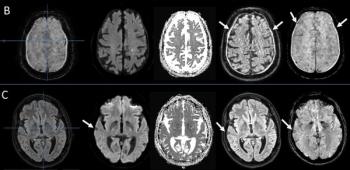
Noting a 7.4 percent incidence of motion artifacts on brain MRI scans for suspected stroke patients, the authors of a new study found that motion artifacts can reduce radiologist and AI accuracy for detecting hemorrhagic lesions.
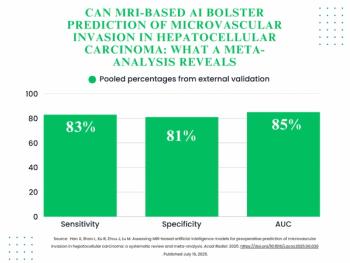
In external validation findings from a 29-study meta-analysis, MRI-based AI had a pooled AUC of 85 percent for preoperative prediction for microvascular invasion in patients with hepatocellular carcinoma.
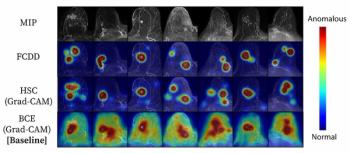
A fully convolutional data description (FCDD) model for identifying anomalies on breast MRI demonstrated an 84 percent AUC for detection tasks in a balanced cohort with a 20 percent malignancy prevalence and a 72 percent AUC for detection tasks in an imbalanced group with a 1.85 percent cancer prevalence.