
Breast Imaging
Latest News
Advertisement
Latest Videos

Shorts
0:34
Could Autonomous AI Lead to 'Dramatic Shifts in Compensation' for Breast Radiologists?
10 days ago
by
Wendie Berg, MD, PhD
0:30
Saving AI Output from Mammography Exams Without Causing Unnecessary Patient Worry
14 days ago
by
Manisha Bahl, MD
0:47
Should Breast Radiologists Save AI Output In PACS?
16 days ago
by
Wendie Berg, MD, PhD
0:49
Could AI Deepen the Disparities with Breast Imaging Access?
20 days ago
by
Amy Patel, MD
0:48
Can AI Improve Triage and Yield for Breast MRI?
22 days ago
by
Wendie Berg, MD, PhD
0:38
How the COVID-19 Pandemic Led to Updated BI-RADS Guidance on Addressing Axillary Lymphadenopathy
a month ago
by
Stamatia Destounis, MD, FACR
0:50
Five Takeaways for Breast Radiologists from Guidelines on Proliferative Breast Lesions with Atypia and LCIS
a month ago
by
Manisha Bahl, MD
0:37
Contrast-Enhanced Mammography Study Shows High Sensitivity and Increased Specificity in Incidence Screening for Breast Cancer
2 months ago
by
Manisha Bahl, MD
0:42
The Advantages of Automated Breast Ultrasound: What New Multicenter Research Reveals
3 months ago
by
Manisha Bahl, MD
0:34
Could a Dynamic Risk Score for Mammography Help Move Radiology Beyond a Diagnostic Role?
4 months ago
by
Constance Lehman, MD, PhD
Podcasts









Advertisement
More News
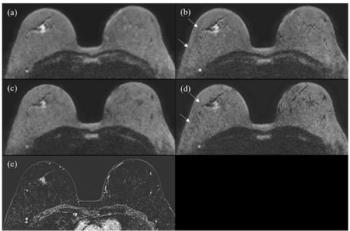
In comparison to standard readout-segmented echo-planar imaging, the combination of deep learning reconstruction and multi-shot diffusion-weighted imaging (DWI) offered significantly higher SNR, CNR and lesion contrast with a greater than a two-minute reduction in scan time.
Catch up on the latest episodes of our Breast Imaging in Focus series with Manisha Bahl, MD, MPH, FSBI, discussing research on a variety of topics including breast arterial calcification on mammograms, automated breast ultrasound, AI and GLP-1 receptor agonists.
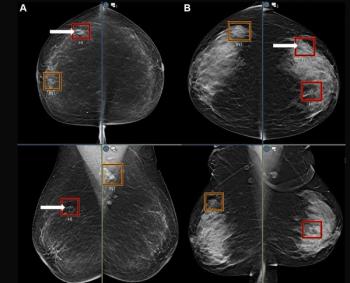
General radiologist assessment of mammograms with adjunctive AI led to a significant increase in cancer detection rate akin to that of breast imaging specialists, according to new research.
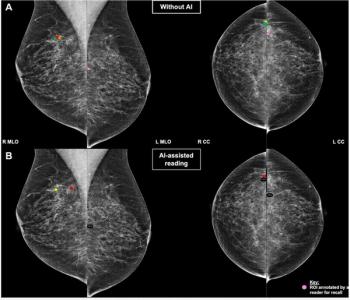
In cases involving false negative suggestions from adjunctive AI for screening mammogram review, researchers found that unassisted radiologists had a 32 percent higher sensitivity rate than those who utilized AI.
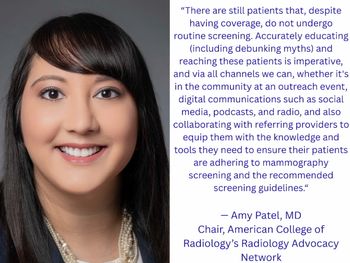
In a recent interview, Amy Patel, MD, discussed recent research on breast cancer screening, pertinent obstacles and keys to facilitating improved adherence with mammography screening.
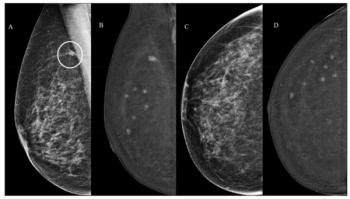
While acknowledging key limitations, the authors of a new literature review noted that contrast-enhanced mammography offers a viable alternative to conventional imaging and breast MRI for preoperative tumor evaluation and may have a significant impact on surgical management.
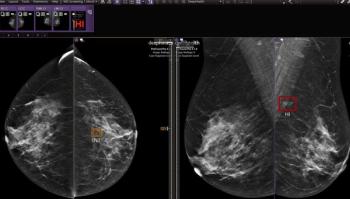
The new functionalities for the AI-enabled Breast Suite software include automated identification of breast arterial calcifications and integration of prior mammograms.
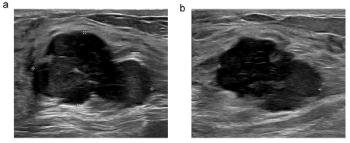
While use of an AI software demonstrated significantly higher accuracy in evaluating BI-RADS 2 presentations and no significant difference with radiologists in BI-RADS 4 assessments of breast ultrasound in a sub-analysis, researchers noted the exclusion of galactoceles, fluid collections and skin lesions that are commonly found in pregnant and lactating women.
David Gruen, MD, MBA, FACR, of Advanced Radiology Consultants, shares how leading programs turned clinical evidence into operational reality.
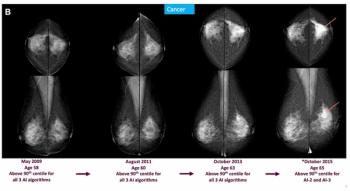
The proportion of breast cancer potentially flagged by three different AI algorithms 10 years prior to diagnosis ranged between 12.7 to 17 percent, according to newly published retrospective research.
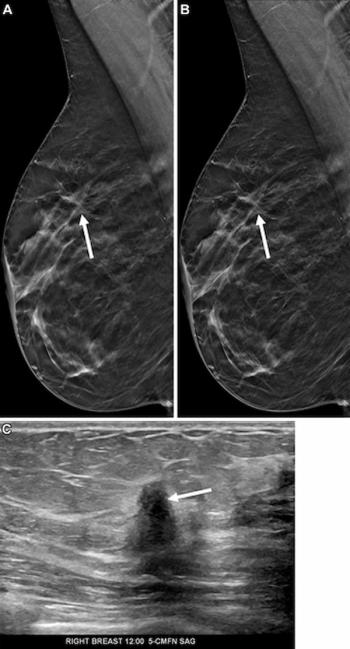
Noting the potential for workload efficiencies in interpreting screening digital breast tomosynthesis (DBT) images, researchers found the use of slab reconstruction technology improved specificity without any impact on sensitivity or cancer detection rate.

After the U.S. Preventive Services Task Force (USPSTF) updated its biennial mammography screening recommendations to begin at 40 years of age, women in their 40s accounted for approximately 50 percent of all screening mammography exams, according to new study findings to be presented at the American Society of Clinical Oncology (ASCO) conference.
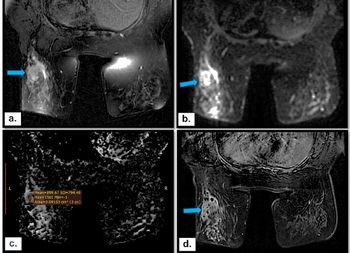
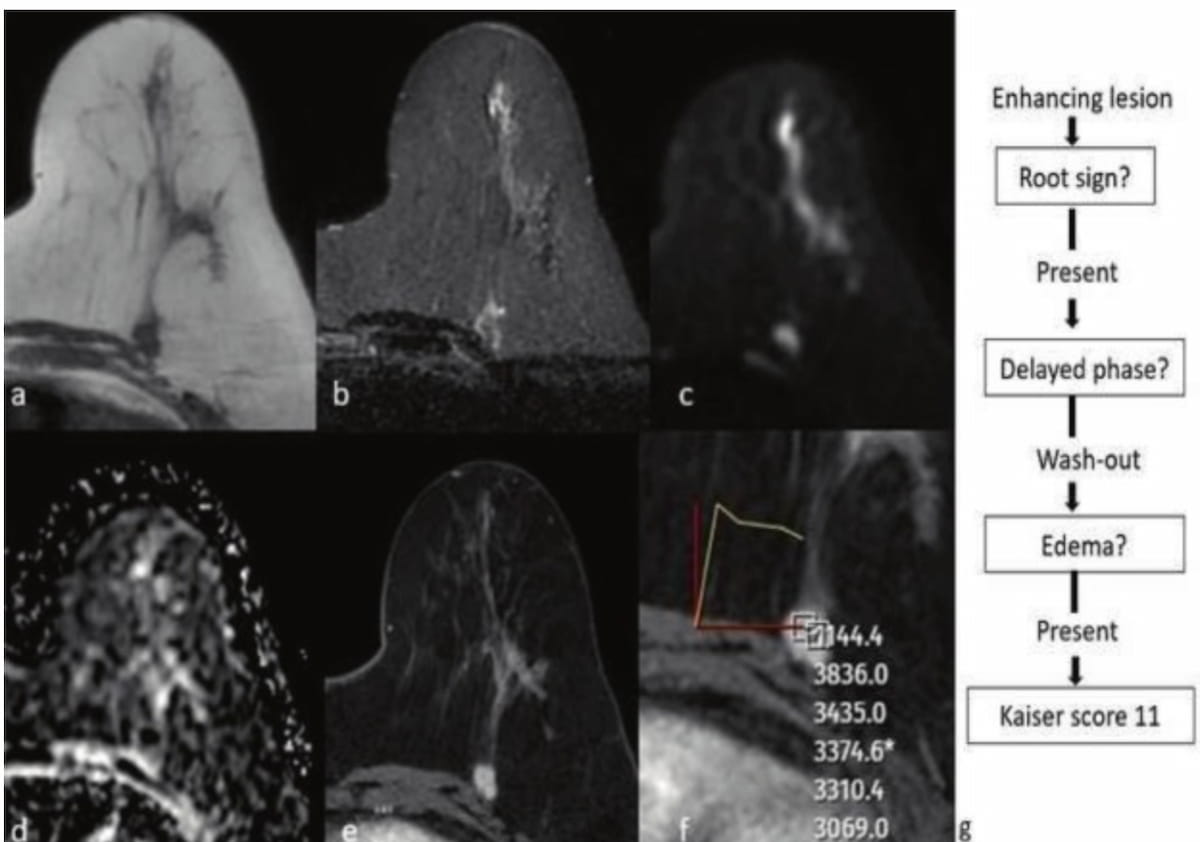
In a study of 351 women with BI-RADS 3-5 non-mass enhancement breast lesions, researchers found that multiparametric MRI offered 98.4 percent sensitivity and a 97.9 percent negative predictive value (NPV).
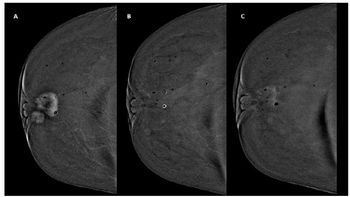
Delayed-only image acquisition for contrast-enhanced mammography after neoadjuvant chemotherapy offered a greater than 17 percent higher sensitivity rate than early-only image acquisition for detecting residual disease, according to a new study.
Researchers estimated that 17.9 million middle-aged women in the United States are overdue for breast, cervical or colorectal cancer screening, according to a new cross-sectional study.
In the latest episode of her “Breast Imaging in Focus” series, Manisha Bahl, MD, MPH, FSBI, discusses a new study of breast arterial calcification on mammography and practical clinical implications for breast radiologists.
In a recent interview with Diagnostic Imaging, Leslie Lamb, MD, MSc, discussed findings from new mammography research that showed an 89.3 percent sensitivity for detecting invasive lobular carcinoma (ILC) with adjunctive AI.
In a recent interview with Diagnostic Imaging, Wendie Berg, MD, PhD, shared her perspective on various aspects of the controversial breast cancer screening guidance issued by the American College of Physicians (ACP), including the use of supplemental imaging in women with dense breasts.
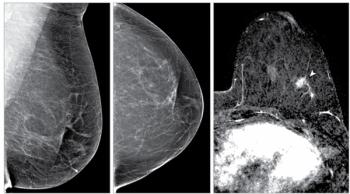
Researchers found that deep learning assessment of mammograms had an 18 percent higher accuracy than breast density in predicting future breast cancer within five years, according to a new study involving over 67,000 women.
In a recent interview with Diagnostic Imaging, Manisha Bahl, MD, MPH, SBI, offers pertinent insights on the controversial breast cancer screening guidance recently issued by the American College of Physicians (ACP).

In a roundup of breast imaging news and research from April 2026, we take a look back at pertinent findings with AI and digital breast tomosynthesis (DBT), breast MRI studies and breast cancer screening guidelines from the National Comprehensive Cancer Network (NCCN) and the American College of Physicians (ACP).
In a recent interview, Stamatia Destounis, MD, offered her perspective about the recent American College of Physicians (ACP) guidance on breast cancer screening and concerns over recommendations in women with dense breasts and biennial versus annual mammography screening.
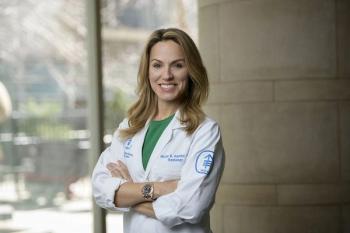
Called a “star physician” by President Trump, Nicole Saphier, MD, a board-certified breast radiologist and associate professor at Weill Cornell Medical College, “is a tireless advocate for women’s health,” according to American College of Radiology (ACR) CEO Dana H. Smetherman, MD.
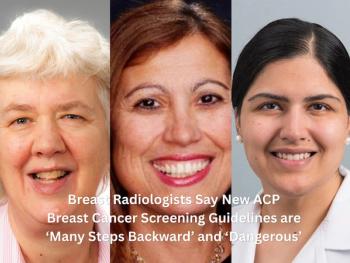
In recent interviews with Diagnostic Imaging, Wendie Berg, MD, PhD, Stamatia Destounis, MD, and Manisha Bahl, MD, shared their concerns about the recent breast cancer screening guidance from the American College of Physicians.
In a recent interview, Manisha Bahl, MD, discussed new breast ultrasound research findings that showed 16 percent higher specificity for breast cancer with adjunctive AI in comparison to unassisted interpretation.
Advertisement
Advertisement
Trending on Diagnostic Imaging
1
FDA Clears MRI-Based AI Software for Prognostic Evaluation of Patients with Mild Cognitive Impairment
2
How AI, Theranostics and More Empowered Patients Have Led to Significant Changes in Radiology
3
What’s Next for AI in Radiology?: Facilitating Data Orchestration Over Fragmentation
4
FDA Clears AI-Enabled FFR-IQ Software for Estimating Fractional Flow Reserve from CCTA
5