


Oncology CT
Latest News
Advertisement
Latest Videos


Shorts

0:42
Emphasizing the Need for More Research on Indication-Based DRLs for CT Imaging
a month ago
by
Kalpana Kanal, PhD

0:34
Is Maturing Technology with CT Scanners a Key Factor with Reduced Radiation Dosing?
a month ago
by
Mahadevappa Mahesh, MS, PhD, FAAPM, FACR

0:59
Why CMS Won't Pay for AI Lung Nodule Detection on CT
a month ago
by
Lauren Nicola, MD
0:31
'Moving in the Right Direction' with CT Radiation Dosing
a month ago
by
Kalpana Kanal, PhD

0:49
How Imaging Insights on Vascular Anatomy May Improve Success with Y90 Embolization Procedures
3 months ago
by
Mina S. Makary, MD
0:33
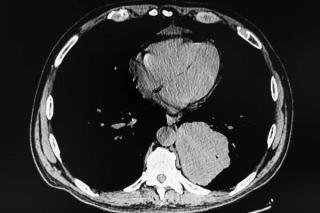
The Value of AI in Extracting Hidden Data from Chest CT Images
5 months ago
by
Shadpour Demehri, MD

0:34
Why LLMs Are a 'Natural Fit' for Automated CT Protocoling
9 months ago
by
Rajesh Bhayana, MD
Podcasts










Advertisement
More News
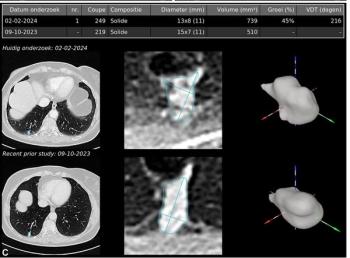
The use of adjunctive AI for pulmonary nodule assessment on chest CT exams led to over a three-minute reduction in median reporting time, according to newly reported research.
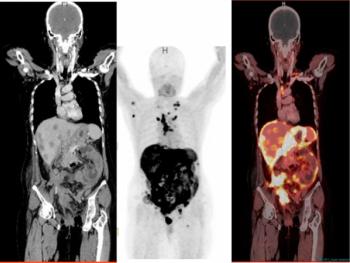
In comparison to contrast-enhanced CT, FAPI PET was associated with over 27 percent higher sensitivity for peritoneal carcinomatosis in the small bowel and 53 percent higher sensitivity in the upper abdomen, according to a new study involving 200 women with primary ovarian carcinoma.
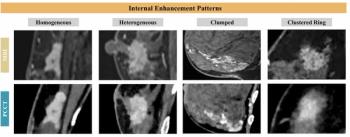
New research suggests that photon-counting CT provides comparable sensitivity to breast MRI for lesion characterization, higher accuracy than MRI for nodal metastasis and lower detection of microcalcifications in comparison to full-field digital mammography.
In addition to providing stronger image quality, well-designed photon-counting CT systems may facilitate increased standardization, efficiency and simplification that may lead to reduced cognitive burden for radiologists.
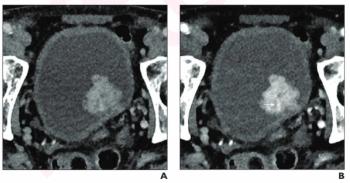
Reducing false positives in evaluation of muscle invasion in bladder cancer cases that can occur with conventional imaging, spectral information with photon-counting CT may offer significantly improved accuracy and specificity in local staging.
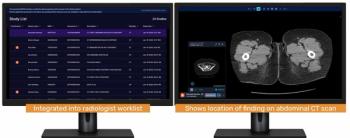
Use of the CARE Multi-Triage CT Body software will be eligible for a New Technology Add-on Payment (NTAP) from CMS starting on October 1, 2026 for inpatients in Medicare fee for service plans.
New computed tomography (CT) research in July 2026 ranged from the ongoing impact of AI to significant declines in CT radiation dosing over the past decade to a growing recognition that coronary artery calcium (CAC) scoring alone may not be sufficient to convey a true picture of cardiovascular risk stratification.

Catch up on the most-well viewed radiology content in July 2026.
In comparison to findings from a similar study in 2014, the national volume computed tomography (CT) dose index (CTDLvol) declined by 9.3 percent, according to newly published research involving 5 million CT exams for over 2.8 million adults in 2025.
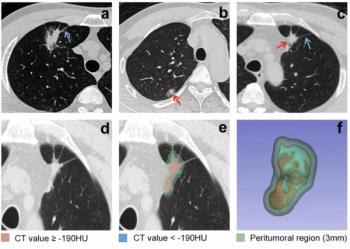
In an external test set from a recent study, a combined radiomic/deep learning model for intratumoral computed tomography (CT) threshold segmentation offered an 82.3 percent AUC and 95.4 percent sensitivity for predicting visceral pleural invasion in patients with lung adenocarcinoma < 30 mm.

Catch up on the top AI-related news and research in radiology over the past month.
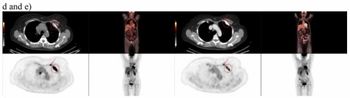
In a comparative study involving 51 women who had systemic treatment for metastatic breast cancer, researchers found that all FDG-PET scans identified measurable target lesions according to PERCIST criteria in comparison to 35 percent of CT scans as per RECIST 1.1 criteria.
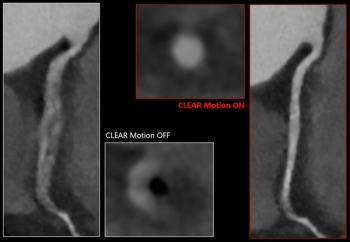
Deep learning-based motion correction with the CLEAR Motion software reportedly bolsters cardiac imaging quality while the PIQE 1024 Deep Learning Reconstruction software offers equivalent SNR to photon-counting CT for high-resolution views of objects less than 0.5 mm.
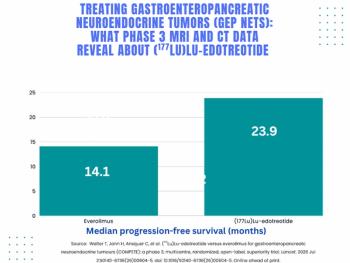
In comparison to everolimus, the peptide receptor radionuclide therapy (177Lu)Lu-edotreotide provided over a nine month longer median progression-free survival for patients with gastroenteropancreatic neuroendocrine tumours (GEP NETs), according to new phase 3 research.
Catch up on the top AI-related news and research in radiology over the past month.
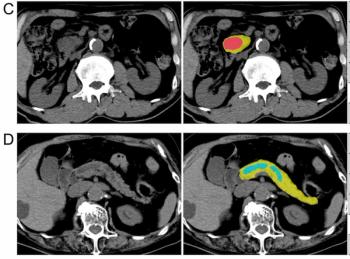
For pancreatic cancers less than or equal to 20 mm, a deep learning model offered a nearly 45 percent higher sensitivity rate with non-contrast CT in comparison to unassisted radiologist interpretation.
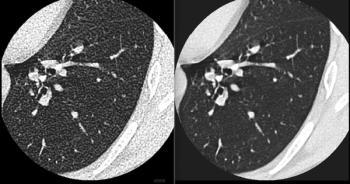
The AI-enabled image processing with SubtleHD(CT) software reportedly facilitates improved noise reduction and image quality for computed tomography (CT) exams.

Catch up on a variety of new FDA clearances in radiology from the past week.
The MIM Contour ProtegeAI+ 2.0 software reportedly offers new AI-powered contouring models for brain MRIs and pelvic CTs.
Catch up on the top radiology content of the past week.
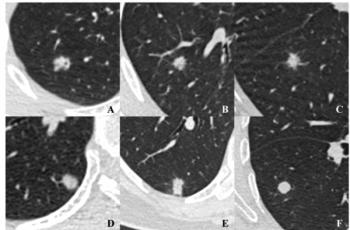
The addition of density heterogeneity on CT to a predictive model for differentiating malignant and benign pulmonary nodules led to a greater than 15 percent improvement in the model’s AUC, according to a new multicenter study.
Catch up on the top radiology content of the past week.

Researchers estimated that 17.9 million middle-aged women in the United States are overdue for breast, cervical or colorectal cancer screening, according to a new cross-sectional study.
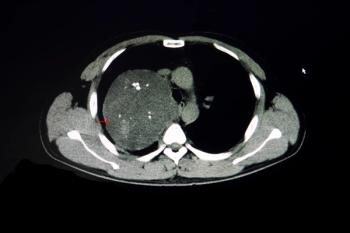
In a new capabilities analysis of 16 CE-marked AI software platforms for CT lung cancer screening, researchers found that only 6.7 percent of supporting peer-reviewed studies were prospective and that none of the studies assessed impact on patient outcomes.
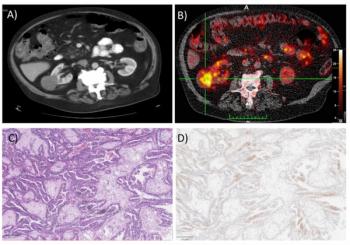
While previous research has demonstrated the capability of the PET/CT agent (89Zr)girentuximab for detecting clear cell renal cell carcinoma (ccRCC), a new analysis reveals a 98 percent positive predictive value (PPV) for detecting non-ccRCC renal cancers.
Advertisement
Advertisement
Trending on Diagnostic Imaging
1
FDA Clears First MRI-Derived AI Software for Assessing Breast Cancer Recurrence Risk
2
MRI Study Links Tightness of High-Convexity Sulci to Higher Risk of Cognitive Decline in Older Adults
3
How AI, Theranostics and More Empowered Patients Have Led to Significant Changes in Radiology
4
See the Real-World Impact of AI in Radiology
5